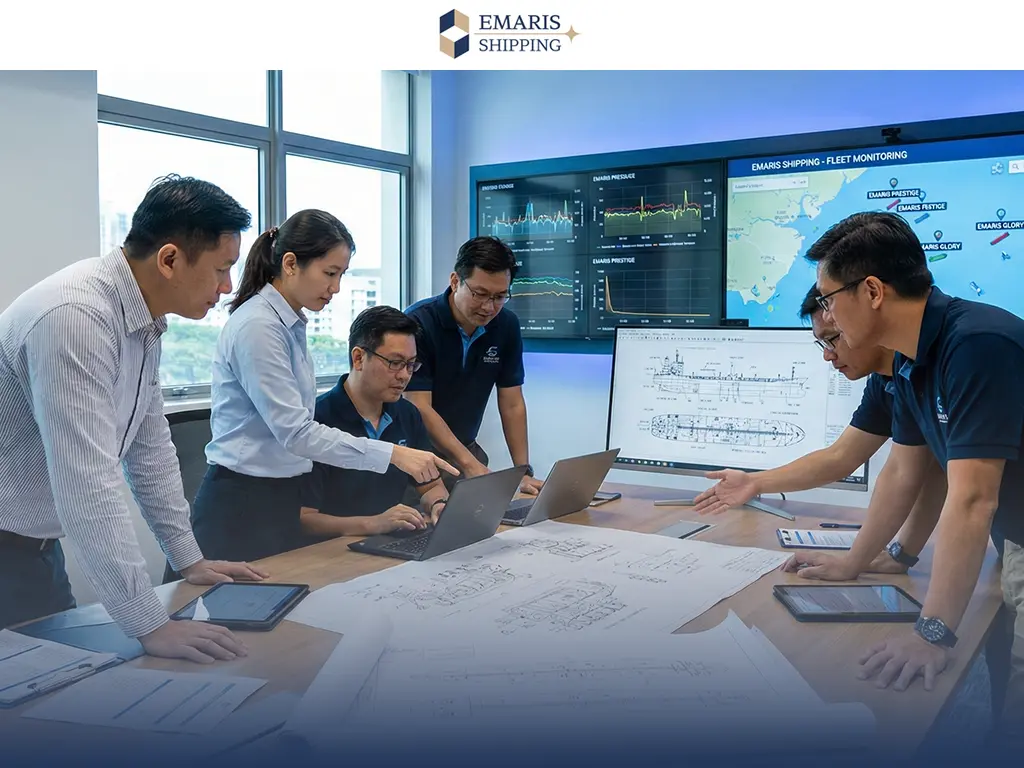
Singapore remains one of the world’s leading maritime hubs, with more than 130,000 vessel calls annually according to the Maritime and Port Authority of Singapore. Operating in such a competitive and highly regulated environment demands technical precision, compliance discipline, and operational efficiency. For many shipowners, the critical question is no longer whether to outsource ship management but when.
Outsourcing ship management too late can expose owners to escalating operational costs, compliance failures, crew instability, and reputational risk. Done at the right time, however, outsourced ship management becomes a strategic lever for operational overhead reduction, improved safety performance, and long-term fleet scalability.
The Growing Complexity of Modern Ship Operations
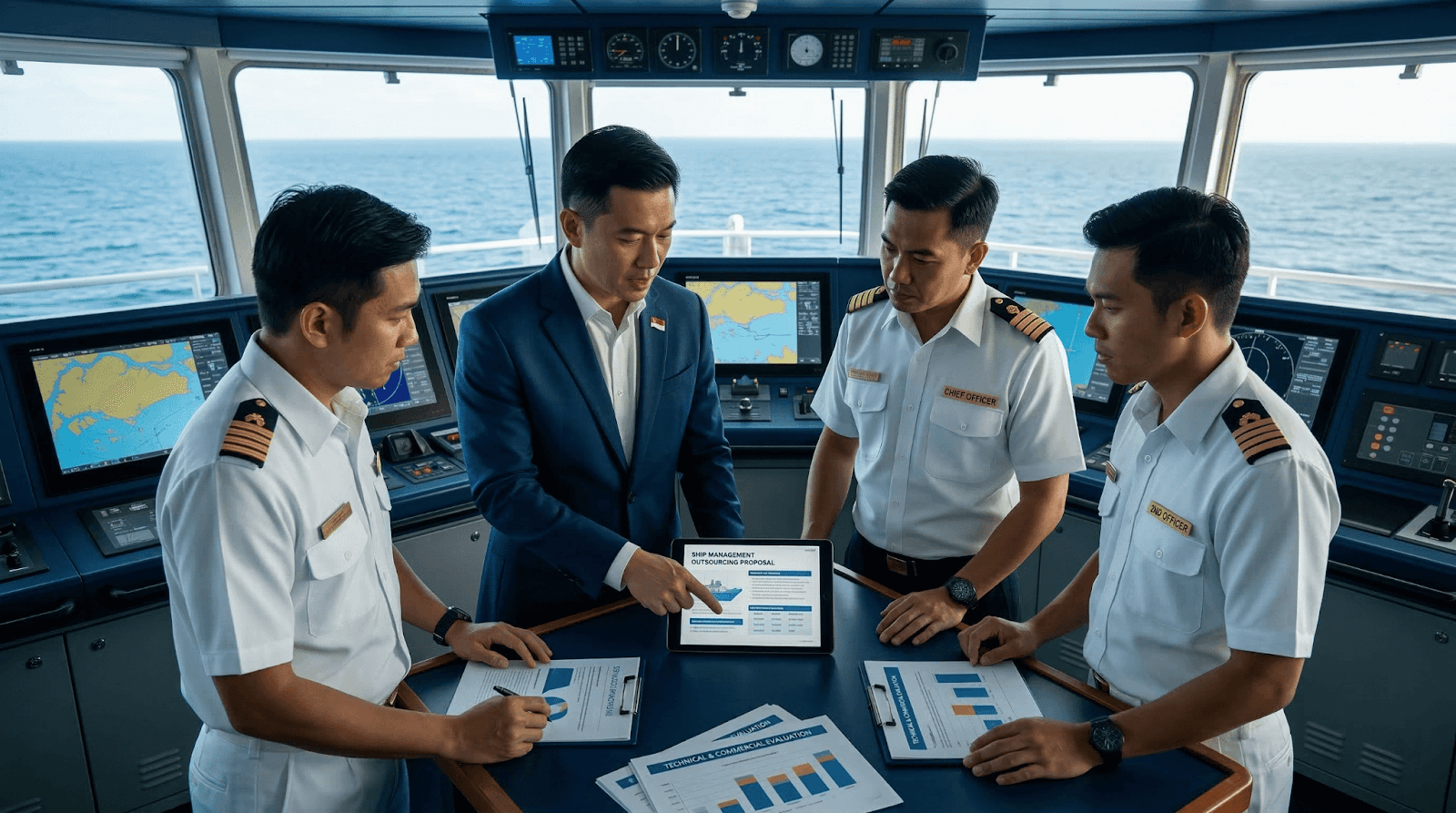
Ship management today extends far beyond routine maintenance and crewing. Owners must now navigate increasing environmental regulations such as IMO 2020, EEXI, and CII. They also face tightened port state control inspections, rising crew welfare expectations, escalating dry-docking costs, and complex digital reporting demands.
For shipowners managing fleets internally, these factors create mounting administrative and technical pressure. At a certain scale, in-house management shifts from a cost-saving measure to a significant risk exposure.
5 Signs It’s Time to Outsource Ship Management
If your internal shore-based teams are overstretched, look for these five critical indicators that it is time to seek professional outsourced ship management in Singapore.
1. Operational Overheads Are Increasing Without Efficiency Gains
Many owners initially manage vessels internally to maintain control. However, as fleets grow or vessels age, operational expenses often rise disproportionately. Common cost drivers include spare parts logistics inefficiencies, repeated technical failures, and unstructured maintenance planning. Outsourced management introduces structured procurement and preventive maintenance, contributing to operational overhead reduction.
2. Crew Management Is Becoming a Burden
Singapore’s maritime ecosystem demands high crewing standards, and mismanagement can quickly lead to operational delays. When crew turnover increases or documentation errors occur, it signals strain within internal systems. Professional ship management companies maintain structured crew databases and rotation planning, significantly reducing the crew management burden and compliance risk.
3. Compliance Risks Are Increasing
With intensified inspections and digital transparency, non-compliance carries higher consequences than ever. Port state control regimes across Asia-Pacific, including those aligned with the Tokyo Memorandum of Understanding, monitor vessel performance closely. If compliance reporting is reactive instead of proactive, outsourcing technical ship management services becomes an important way to control risk.Resource: https://www.emarisshipping.com/blogs/technical-ship-management-singapore
4. Fleet Expansion Is Being Delayed by Capacity Limits
Fleet scalability is a frequently overlooked trigger. If new acquisitions are postponed due to management bandwidth or if technical superintendents are overloaded, your internal structure is likely limiting growth. Outsourced ship management provides scalable infrastructure, allowing owners to expand fleets without proportionally expanding shore-based headcount.
5. Dry Dock and Lifecycle Costs Are Escalating
Vessel lifecycle cost control requires strategic planning, not just reactive repairs. Without structured dry dock forecasting and procurement optimization, maintenance becomes more expensive over time. Outsourcing introduces lifecycle cost modeling and condition-based monitoring to improve long-term capital efficiency.
The Risks of Waiting Too Long
While outsourcing is often viewed as a cost decision, delaying it can create measurable financial and operational exposure.
Increased Detention Risk: A single vessel detention in Singapore or regional ports can disrupt charter schedules and strain commercial relationships.
Reputation Impact: Charterers and insurers increasingly assess technical performance history; a pattern of deficiencies affects future negotiations.
Escalating Crew Turnover: Poor HR management increases attrition rates and operational instability, directly affecting safety and performance.
Loss of Strategic Focus: Shipowners should focus on asset growth and commercial positioning rather than administrative overload.
Waiting too long often turns outsourcing into damage control instead of a planned move.Conclusion: Outsourcing as a Strategic Lever
For growing shipowners in Singapore, outsourced ship management often transitions from optional to essential. Modern ship management partnerships operate on transparent reporting frameworks and KPI benchmarking, allowing owners to retain strategic oversight while transferring execution risk.
The right time to outsource is typically before compliance issues escalate, before fleet expansion stalls, and before overhead becomes unmanageable. Proactive outsourcing protects asset value and operational continuity.
Ready to evaluate your management structure? Explore Emaris Shipping’s comprehensive ship management services to support your technical, safety, and operational domains.