Ship safety management services exist to prevent incidents before they escalate into regulatory findings, operational disruptions, or Port State Control detentions. This blog will walk you through how technical ship management directly reduces safety incidents and PSC detentions for tanker fleets by controlling systems, behaviours, and compliance risk at the operational level.
Why Safety Incidents and PSC Detentions Are Linked
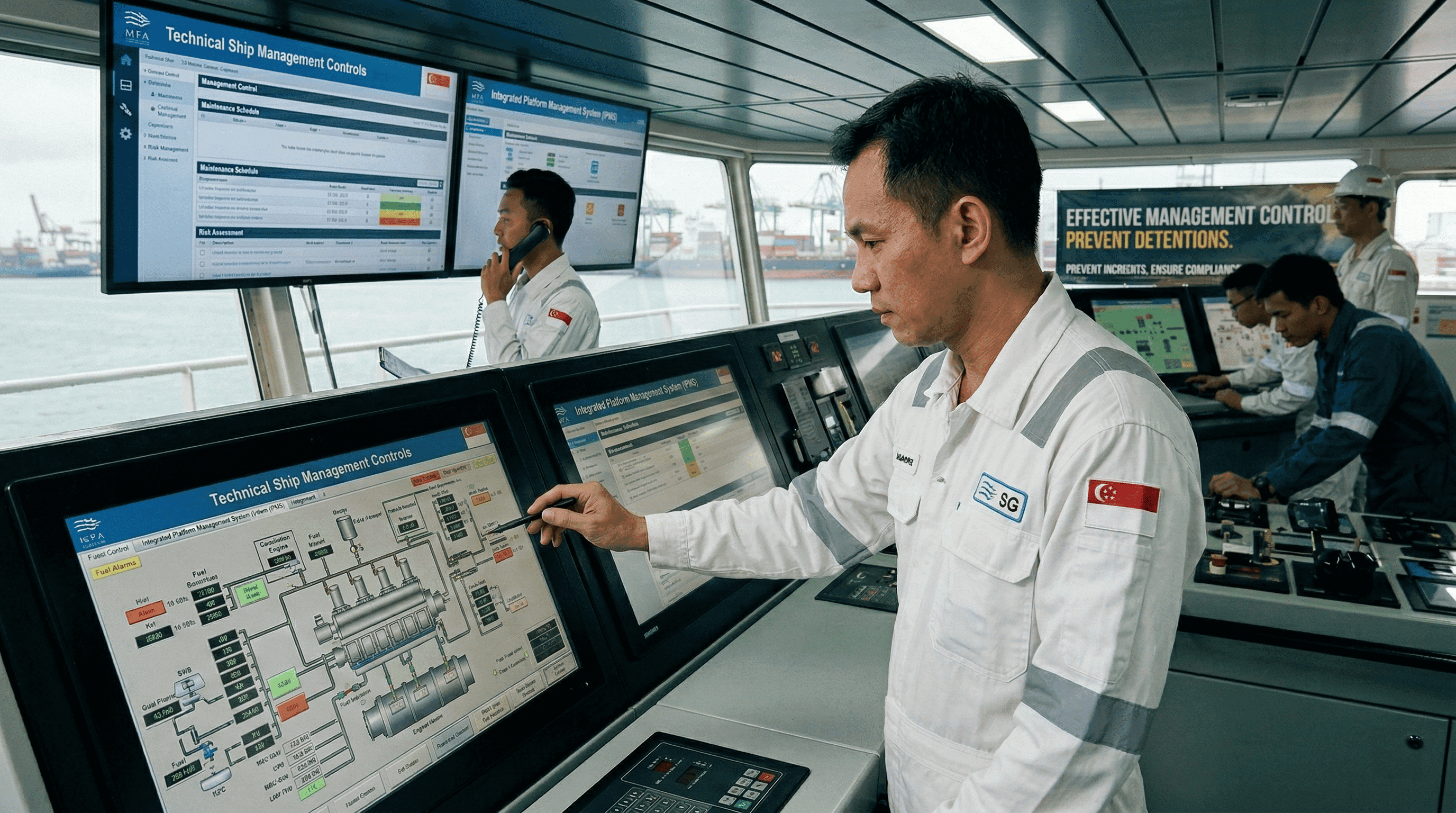
For tanker operators, safety incidents and PSC detentions rarely occur in isolation. Detentions are usually the visible outcome of deeper control failures that have existed for months.
Common detention triggers such as inoperative safety equipment, poor documentation, crew unfamiliarity with procedures, or repeated deficiencies almost always trace back to weaknesses in ship compliance management and daily safety execution. Port State Control regimes consistently report that repeat deficiencies and safety management failures are leading contributors to detention outcomes, as reflected in Paris MoU annual Port State Control inspection statistics.
Technical ship management sits at this intersection. It governs how safety procedures are implemented, how risks are identified, and how compliance is maintained under real trading pressure.
What Technical Ship Management Controls That Prevent Incidents
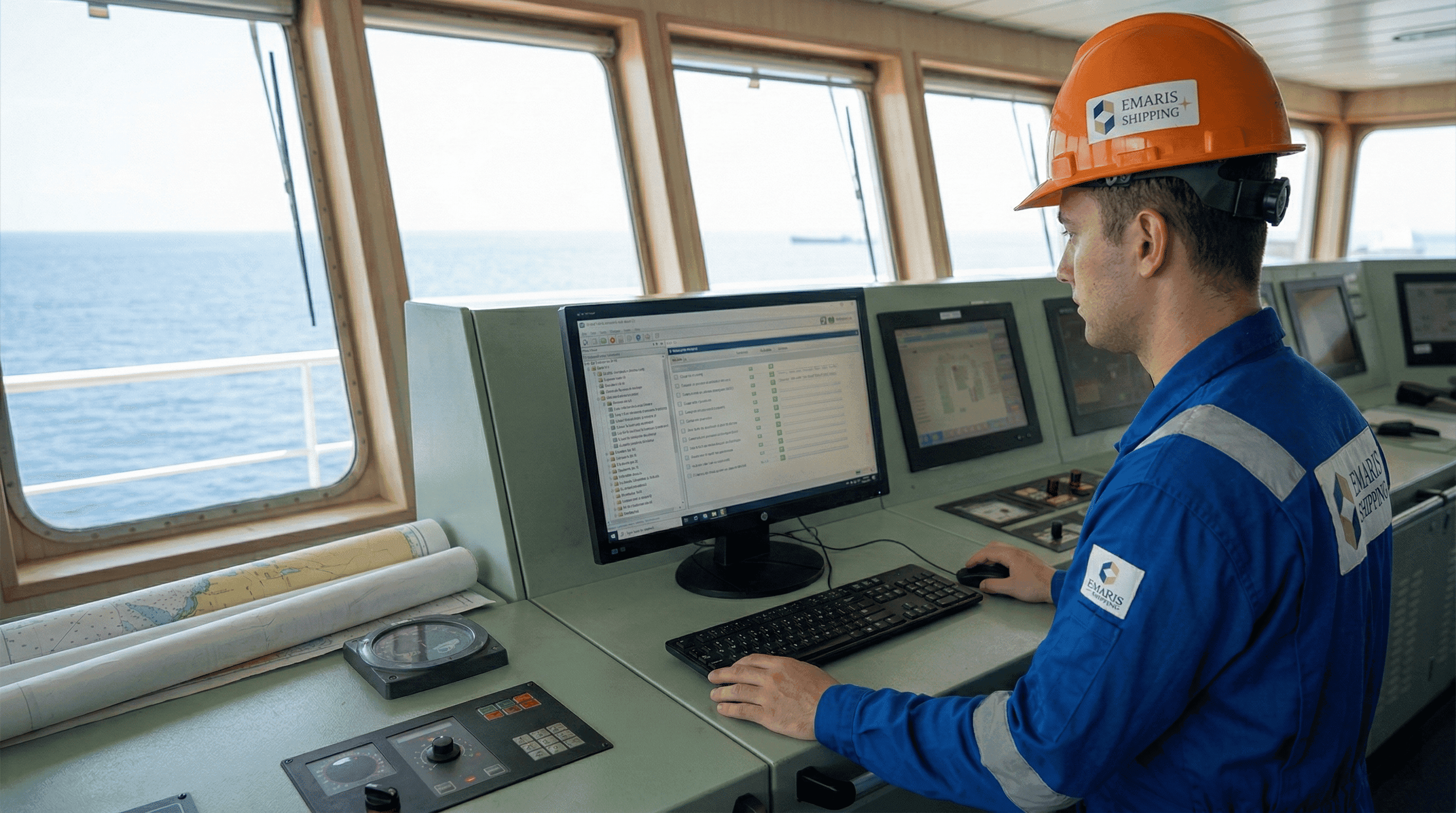
Safety Is a System Outcome, Not a Policy Outcome
Tanker safety failures are rarely caused by missing policies. They stem from gaps between written procedures and actual onboard behaviour.
Effective tanker safety management focuses on:
Equipment condition matching documented status
Crew understanding matching assigned responsibilities
Procedures reflecting real operating scenarios
Defects being reported early rather than deferred
Technical ship management services enforce this alignment by integrating engineering control with safety oversight.
Planned Maintenance as a Safety Tool
A well-managed vessel does not wait for failures to reveal themselves during inspections. Planned maintenance systems are structured to surface risks early.
On tankers, this includes:
Safety critical equipment tracked with zero tolerance for overdue tasks
Cargo handling systems maintained based on exposure, not minimum intervals
Firefighting and lifesaving appliances tested under realistic conditions
Machinery defects analysed for recurrence patterns
When maintenance systems are disciplined, inspectors see consistency between records and physical condition. That consistency alone removes a major detention risk, a distinction often blurred in ship management vs technical management responsibilities.
How Technical Management Reduces Human Error
Crew Familiarity Is a Measurable Risk Factor
PSC inspectors routinely test crew knowledge during drills and spot checks. Detentions often follow when crew responses expose uncertainty rather than incompetence.
Technical ship management reduces this risk by ensuring:
Drills reflect likely scenarios, not ideal ones
Crew rotations include structured handover of safety-critical knowledge
Safety procedures are simplified and standardised across the fleet
Training gaps are tracked and closed systematically
This approach reduces reliance on individual experience and builds collective competence across vessels,as explained in technical management operational control.
Incident Reporting Without Fear
A weak safety culture suppresses incident reporting. A strong one treats near-misses as data.
Technical managers enforce reporting systems where:
Near-misses are logged and reviewed without blame
Root causes are investigated at system level
Corrective actions are verified, not assumed
Lessons are shared fleet-wide
This reduces repeat incidents, which PSC inspectors actively look for when assessing vessel history.
PSC Preparation Happens Every Day, Not Before Arrival
Why “Inspection Readiness” Fails Without Systems
Many operators focus on PSC preparation only when entering high-risk ports. That approach fails because inspectors assess patterns, not snapshots.
Ship safety management services maintain continuous readiness by:
Keeping statutory certificates current and verifiable
Aligning onboard documentation with actual condition
Ensuring defect lists are controlled and justified
Maintaining drill records that reflect genuine execution
When readiness is continuous, inspections become predictable rather than disruptive, a core principle reinforced in SIRE 2.0 compliance preparation for tanker fleets.
Managing Deficiencies Before They Accumulate
Repeated deficiencies are one of the strongest predictors of detention.
Technical ship management prevents accumulation by:
Tracking deficiency trends across vessels
Prioritising recurring findings over isolated issues
Closing corrective actions with verification
Escalating unresolved risks before inspections occur
This proactive control materially reduces detention probability across tanker fleets.
The Role of Safety Management Systems in Detention Prevention
SMS Is Only Effective When Enforced
Every tanker operates under a Safety Management System. What differentiates high-performing fleets is enforcement.
Technical managers ensure SMS effectiveness by:
Auditing system application, not document completeness
Testing emergency responses under realistic constraints
Updating procedures when operational realities change
Holding shore and ship accountable to the same standards
PSC inspectors quickly identify when an SMS exists only on paper. Enforced systems show through crew confidence and operational consistency.
How Technical Audits Reduce Regulatory Risk
Internal Audits as Early Warning Systems
Internal technical audits are one of the strongest tools for incident prevention.
Effective audits examine:
Equipment condition against maintenance records
Safety equipment accessibility and readiness
Crew familiarity with assigned emergency roles
Closure quality of previous findings
Audit scope and technical standards often align with class requirements under the IACS Unified Requirements governing hull and machinery condition, which guide how structural and machinery integrity should be assessed and maintained.
Closing the Loop Matters More Than Findings
Findings alone do not reduce risk. Closure discipline does.
Technical ship management services track corrective actions until:
Root causes are addressed
Preventive measures are implemented
Effectiveness is verified onboard
Trends are reviewed at fleet level
This level of discipline directly correlates with lower detention rates.
Why Tanker Fleets Are Held to a Higher Standard
Tankers face heightened scrutiny due to:
Environmental risk exposure
Cargo volatility
Public and regulatory sensitivity
Charterer vetting requirements
Ship compliance management for tankers therefore requires tighter controls, clearer accountability, and faster response cycles than other vessel types.
Technical ship management adapts systems to reflect this risk profile rather than applying generic templates.
Digital Oversight and Predictable Safety Outcomes
Modern technical management relies on digital visibility.
Integrated platforms allow managers to:
Monitor maintenance backlogs in real time
Track safety incident trends across fleets
Identify vessels drifting from compliance norms
Intervene before risks manifest physically
Predictability reduces incidents. Predictability also reduces detentions.
Where Emaris Shipping Fits in Safety and Compliance Control
Emaris Shipping supports tanker and bunker fleets through integrated ship safety management services, combining technical management, crew oversight, and maritime compliance into a single operating framework.
This integration removes gaps between engineering, safety procedures, and inspection readiness, which are the most common sources of incidents and PSC findings.
Choosing Technical Management as a Risk Decision
Selecting a technical manager is not an administrative choice. It is a risk decision.
Owners evaluating tanker safety management should look for:
Demonstrated reduction in repeat deficiencies
Strong audit and corrective action discipline
Clear linkage between safety data and decisions
Leadership experience with PSC and tanker inspections
The wrong structure increases exposure silently. The right one stabilises operations visibly.
Conclusion
Technical ship management reduces safety incidents and PSC detentions by enforcing alignment between systems, people, and real operating conditions. Structured maintenance, disciplined safety execution, and continuous readiness replace reactive inspection preparation.
If your tanker fleet is experiencing repeat deficiencies, inspection pressure, or safety incidents that feel preventable, speak with Emaris Shipping to review your current safety and compliance controls and identify where technical management can materially reduce risk.
FAQs About Ship Safety Management Services
How do ship safety management services reduce PSC detentions?
They maintain continuous compliance through enforced procedures, verified maintenance, and crew readiness, reducing inspection findings before PSC boarding occurs.
What causes most tanker PSC detentions?
Inoperative safety equipment, poor documentation alignment, repeated deficiencies, and crew unfamiliarity with procedures are the most common causes.
Can technical management prevent safety incidents entirely?
It cannot eliminate risk, but it significantly reduces incident frequency and severity by identifying and controlling hazards early.
Why are tankers inspected more strictly than other vessels?
Higher environmental and safety risks lead to stricter enforcement, deeper inspections, and lower tolerance for deficiencies.
Is technical ship management cost-effective?
Yes. Preventing incidents, detentions, and off-hire time reduces total operating cost over the vessel lifecycle.