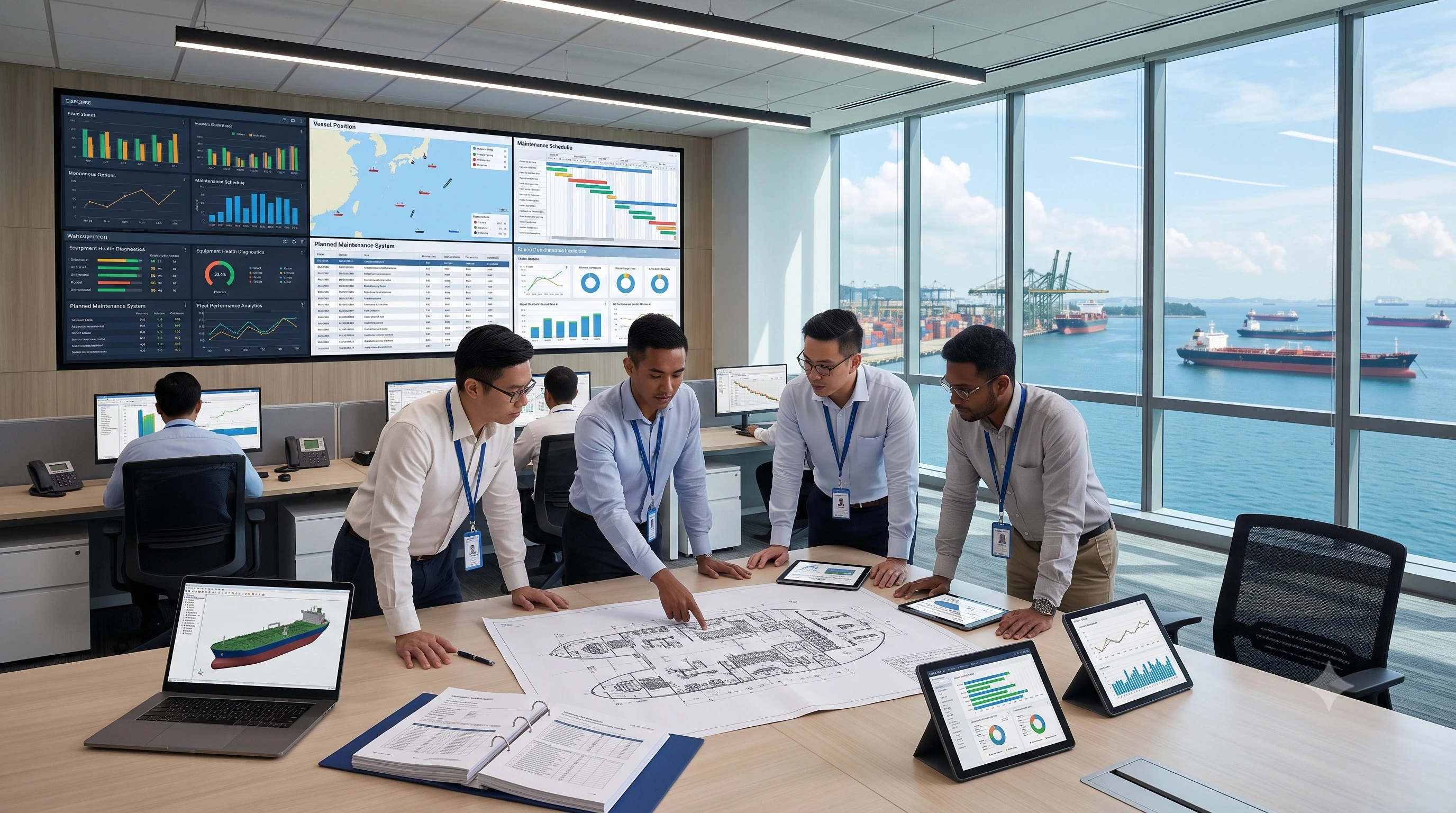
Singapore's position as the world's busiest bunkering port and a leading maritime hub gives tanker owners a strategic reason to anchor their technical management here. But beyond geography, the Singapore technical ship management ecosystem in 2026 offers a combination of regulatory sophistication, talent depth, and digital infrastructure that is difficult to replicate elsewhere.
This overview is written for ship owners evaluating or reviewing their technical management arrangements for tanker fleets operating in the regional and international trades.
Technical Ship Management in Singapore in 2026Singapore is home to over 150 ship management companies ranging from global operators managing hundreds of vessels to specialist firms managing focused fleets of 5–20 vessels in the tanker, bunker barge, and chemical sectors.
The Maritime and Port Authority of Singapore (MPA) actively supports the development of the ship management sector through the Maritime Singapore Green Initiative, the International Maritime Centre (IMC) framework, and, most recently for 2026, the OCEANS-X data exchange platform, which enables system-to-system data sharing between ship managers, port operators, and regulatory bodies.
For tanker owners specifically, Singapore-based technical managers offer:
Proximity to Singapore's world-class ship repair and dry dock infrastructure (Sembcorp Marine, Keppel, and independent yards)
Deep familiarity with MPA's requirements for vessels calling at Singapore, including mass flow metering (MFM) requirements for bunker operations
Access to a talent pool of technical superintendents and DPAs with significant tanker experience across the APAC trading range
A regulatory environment that rewards ISM, TMSA, and SIRE compliance, essential for tanker owners trading with oil majors
Key Regulations Affecting Tanker Technical Management in Singapore
Tanker owners whose vessels trade in Singapore waters or use Singapore as their management base must comply with a layered regulatory framework:
MPA Requirements
The Maritime and Port Authority of Singapore requires vessels calling at Singapore to hold valid statutory certificates under SOLAS, MARPOL, and MLC. For bunker tankers operating in Singapore, MPA mandates mass flow metering (MFM) systems for all bunker transfers, an operational requirement that technical managers must build into their maintenance and calibration schedules.
Flag State Requirements
Most tankers managed from Singapore operate under flags including Panama, Marshall Islands, Liberia, and Singapore's own register (SIMR). Each flag state has specific survey and certification requirements that the technical manager must track and coordinate with the vessel's classification society.
MARPOL Annex VI, Emission Controls
Vessels trading through the Singapore Emission Control Area must comply with sulphur emission limits (0.5% global cap, 0.1% in ECAs). Technical managers are responsible for ensuring fuel switching procedures are documented in the vessel's Fuel Management Plan and that fuel oil record books are correctly maintained.
Port State Control (PSC)
Singapore is a member of the Tokyo MOU, meaning vessels calling at Singapore ports are subject to Port State Control inspections by MPA surveyors. A vessel with a poor PSC track record, defined by THETIS-MOU as a higher-risk ship, faces more frequent and detailed inspections. Technical managers are responsible for maintaining vessel condition and documentation at a standard that minimises PSC deficiency risk.
Tanker Technical Management Requirements: What Oil Majors Expect
Tanker owners trading with oil majors, Shell, Chevron, BP, ExxonMobil, TotalEnergies, face a vetting layer on top of the standard regulatory framework. OCIMF's Ship Inspection Report Programme (SIRE) and its 2024-updated iteration, SIRE 2.0, is the primary vetting instrument for tankers and chemical carriers seeking to trade with major charterers.
SIRE 2.0, which fully replaced the original SIRE programme from 2024, introduces a more dynamic inspection model that moves beyond a static checklist to a risk-based assessment covering:
Navigation safety and bridge management
Cargo and mooring operations
Engineering and technical maintenance standards
Human element, crew competency, fatigue management, and safety culture
For technical ship managers, SIRE 2.0 readiness requires a sustained operational standard, not a pre-inspection preparation sprint. The inspection process is now digital (tablet-based), uses photographic evidence, and generates a report that is accessible to all subscribing charterers through OCIMF's database. A poor SIRE report can effectively exclude a vessel from trading with oil majors until remedial action is taken and a re-inspection completed.
Singapore-based technical managers with established oil major and OCIMF relationships are well-placed to prepare vessel crews and documentation to the standard SIRE 2.0 demands.
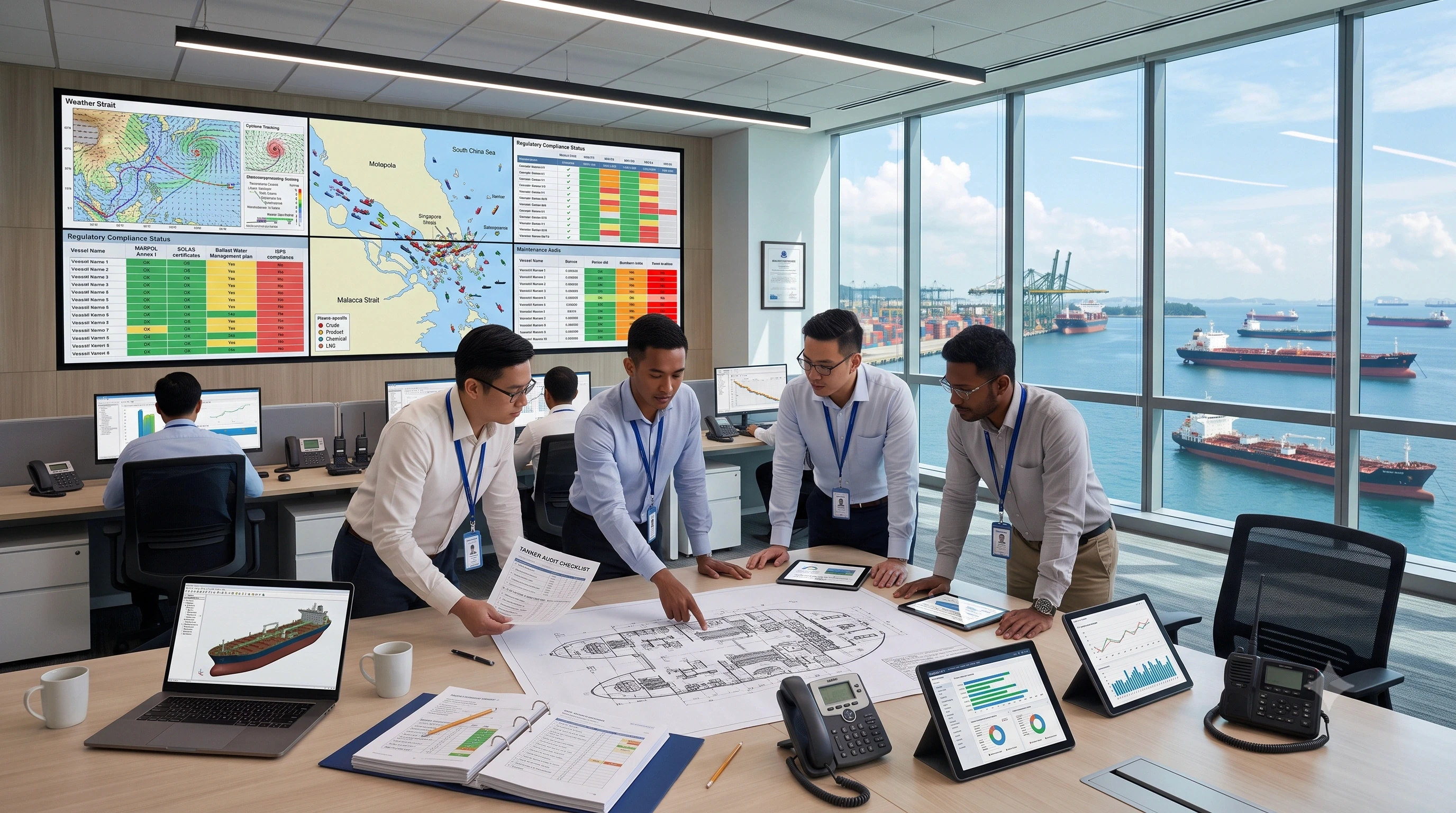
SIRE 2.0 Readiness: The Technical Manager's Checklist
Technical managers preparing tankers for SIRE 2.0 inspections must ensure:
Bridge procedures and checklists are current, vessel-specific, and demonstrably in use (inspectors look for evidence of use, not just the presence of the documents)
Cargo and mooring operations procedures align with OCIMF's Mooring Equipment Guidelines (MEG4) and are being followed in practice
Planned Maintenance System is up-to-date with no overdue jobs, and the chief engineer can demonstrate the maintenance status of key systems
ISM/SMS implementation is active and evidenced, safety meetings are minuted, near-miss reports are being raised and investigated, drill records are current
Crew certification and watchkeeping records confirm that all officers hold valid STCW certificates with appropriate tanker endorsements
The shift to SIRE 2.0 has made the quality of a vessel's day-to-day operational management, as opposed to its pre-inspection preparation, the primary determinant of vetting outcomes.
Why Singapore-Based Technical Managers Deliver an Advantage for Tanker Owners
The case for Singapore-based technical management for tanker owners comes down to three practical advantages:
Operational Proximity
Most tanker trades touching Southeast Asia pass through Singapore or the Malacca Strait. A Singapore-based technical manager can respond to operational issues, coordinate crew changes at Changi Airport, arrange emergency spare parts through Singapore's established maritime supply chain, and interact with classification society surveyors, all within the same time zone and often within the same day.
Regulatory Familiarity
Singapore-based managers are intimately familiar with MPA requirements, Singapore Customs procedures for vessel stores and spares, and the operational practicalities of the Singapore port environment. This eliminates the time and cost friction that arises when a European or Far Eastern office manages a vessel trading primarily in Southeast Asia.
Vetting and Oil Major Relationships
Singapore's maritime hub status means local managers have established working relationships with oil major vetting teams, classification society survey offices, and P&I Club correspondents. These relationships matter when a vessel needs an urgent vetting inspection or requires a surveyor to attend at short notice for an insurance claim.
Emaris Shipping: Singapore Technical Management for Tanker and Bunker Fleets
Emaris Shipping is a Singapore-based ISM-certified ship management company specialising in technical management of tanker and bunker barge fleets operating in Singapore, Malaysia, and Indonesia. Our team combines over 60 years of combined technical management experience, with staff who have worked at sea on the vessel types we now manage ashore.
Our Marine Manager, Capt. Danish Farrell, brings 22 years of maritime experience including fleet management of up to 37 vessels and direct experience implementing TMSA Level 2 standards. Our Technical Manager, Mr. P Elanzaran, holds over 17 years of technical ship management experience with background in the Republic of Singapore Navy, giving our team a depth of technical capability that is unusually strong for a boutique Singapore manager.
For tanker owners looking to evaluate their current technical management arrangements or seeking a Singapore-based manager for new acquisitions, Emaris offers full technical ship management services including ISM compliance, class survey management, SIRE preparation, and digital operational systems integration. Read more in our detailed guide to technical ship management in Singapore.
Frequently Asked Questions
What regulations must a tanker owner comply with in Singapore?
Tankers calling at Singapore must comply with MPA port requirements, SOLAS and MARPOL statutory certificates, and, for bunker tankers, MPA's mass flow metering (MFM) requirements. Vessels on the Singapore register (SIMR) also face Singapore flag state requirements managed through MPA's Marine Division.
What is SIRE 2.0 and when did it replace the original programme?
SIRE 2.0 is OCIMF's updated Ship Inspection Report Programme, which became the sole active inspection model from 2024. It uses a tablet-based, dynamic inspection protocol with photographic evidence collection, replacing the original static questionnaire format. Reports are shared digitally across all subscribing charterers through OCIMF's database.
How does a Singapore-based technical manager reduce OPEX for tanker owners?
Proximity to Singapore's maritime supply chain reduces spare parts lead times and delivery costs. Local relationships with class surveyors and port agents reduce administrative friction. Strong ISM and vetting compliance reduces off-hire risk and insurance premiums. Collectively, these factors typically deliver lower total cost of ownership compared to remote management.
Is TMSA relevant for all tanker owners?
The Tanker Management Self Assessment (TMSA) is an OCIMF programme relevant to tanker owners and operators trading with oil majors. While it is not a regulatory requirement, most oil major vetting programmes require or strongly prefer tanker managers to participate in TMSA and to demonstrate continuous improvement across its 13 KPIs.