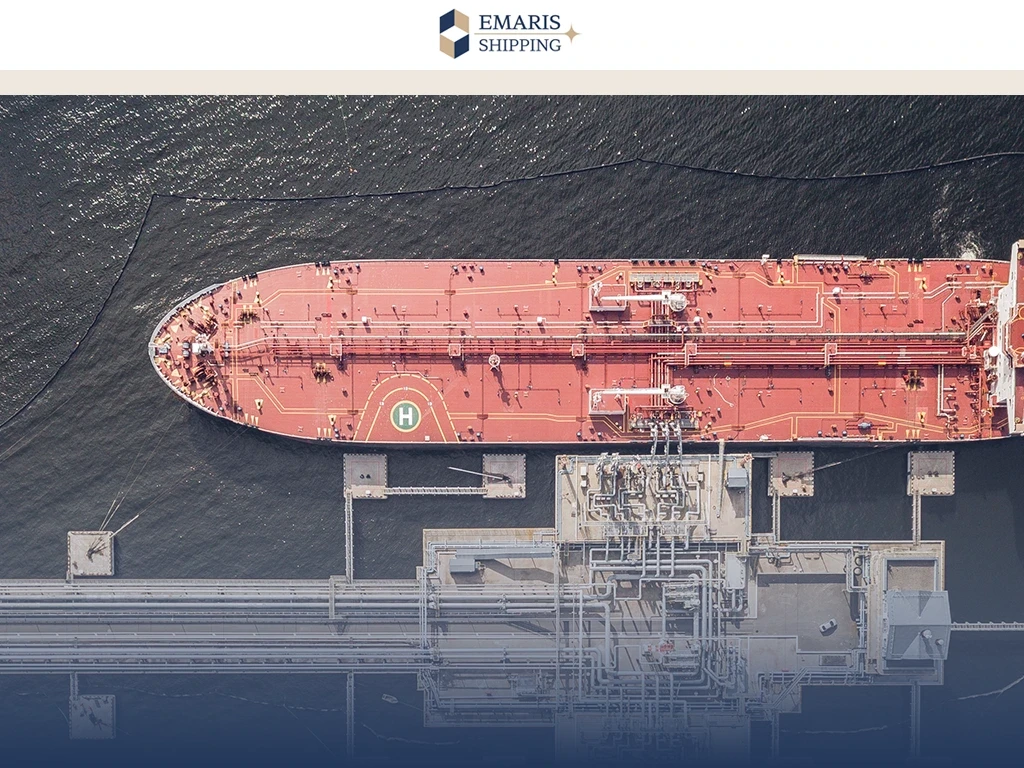
Two identical product tankers. Same vessel age, same trade route, same Flag State. One managed with real-time performance monitoring connected to a shore-based superintendent dashboard. The other managed through weekly reports compiled by the Chief Engineer and emailed to the technical team every Sunday.
Six months into the year, the monitored vessel's superintendent notices a gradual upward trend in main engine exhaust temperatures on cylinders three and five. He contacts the Chief Engineer directly. Fuel injectors are inspected and two are found worn beyond acceptable limits. They are replaced during a scheduled port call in Singapore. Total cost: parts, labour, four hours of additional port time.
The other vessel suffers an unplanned main engine shutdown in the Singapore Strait at 14:00 on a Wednesday. Towage is arranged. The vessel anchors off Changi for nine days while parts are sourced and repairs are completed. Off-hire costs, towage, emergency parts procurement, and port fees exceed USD 300,000. The charterer serves a formal complaint. The owner's P&I premium increases at the next renewal.
Same vessel type. Same trade. Entirely different outcome, because one ship manager had continuous visibility and the other was waiting for Sunday's report.
This is what real-time fleet monitoring actually does in practice. This article explains what it involves, what it catches, and why professional ship management now treats it as a baseline expectation instead of a premium extra.What Real-Time Fleet Monitoring Actually Means
The term is used loosely in the industry. Before examining the value, it helps to define what real-time monitoring actually involves operationally.
There are three distinct layers.
Vessel performance monitoring captures continuous data from onboard sensors and machinery systems and transmits it via satellite to a shore-based dashboard. This includes main engine parameters (RPM, fuel consumption, exhaust temperatures, turbocharger performance, cylinder pressures) as well as auxiliary machinery such as generators, purifiers, and compressors. Hull performance data, including speed loss and trim optimisation indicators, is increasingly incorporated as fuel efficiency becomes a regulatory and commercial priority.
Compliance and documentation monitoring tracks certificate validity for both crew and vessel, planned maintenance system completion rates, drill records, safety management system submissions, and open deficiency status from Port State Control inspections. This layer connects operational data to regulatory obligations, translating what is happening on the vessel into what the vessel's compliance position looks like at any given moment.
Voyage and position monitoring uses AIS-based tracking combined with weather routing data and ETA management tools. Route deviation alerts and port approach notifications keep the shore team informed of vessel movements without requiring the vessel to report manually.
Real-time monitoring is not a single system. It is a data layer that connects the vessel to the shore team continuously, replacing the lag of weekly reports with live operational visibility across all three dimensions simultaneously.
How It Reduces Unplanned Downtime
Unplanned machinery failure is the leading cause of off-hire for tankers operating in Southeast Asia. The financial exposure is significant: a main engine breakdown in a restricted waterway or high-traffic port environment can generate towage costs, emergency repair fees, off-hire claims, and port expenses that exceed USD 200,000 to 500,000 depending on location, vessel size, and parts availability. Real-time monitoring attacks this exposure directly.
Traditional planned maintenance is time-based. Service intervals are triggered by running hours or calendar dates defined in the planned maintenance system. This approach is reliable but inherently reactive: it services equipment on schedule regardless of whether that equipment is developing a problem or performing well within acceptable parameters.
Real-time monitoring adds a condition-based layer on top of the schedule. When parameters trend outside defined ranges (exhaust temperatures rising gradually over two weeks, vibration levels on a cargo pump increasing beyond baseline, separator throughput declining without a corresponding change in cargo grade), the system generates an alert. The superintendent reviews it, contacts the vessel, and the issue is investigated before it becomes a failure.
This fundamentally changes the maintenance decision from calendar-driven to evidence-driven. Shore-based superintendents can intervene based on what the data shows rather than waiting for the crew to report a problem. On vessels where reporting culture is strong, this is reinforcement. On vessels where crew are reluctant to escalate concerns, it is a safety net.
The commercial case extends to dry docking. Real-time hull performance data (capturing speed loss against a clean hull baseline, fouling rate indicators, and fuel overconsumption trends) allows ship managers to time dry docking based on actual hull condition rather than fixed intervals. Premature docking consumes dry dock budget without operational necessity. Delayed docking accumulates speed loss and fuel overconsumption that erodes voyage economics. Data-driven dry dock timing optimises both.
Underwriters have also taken notice. Hull and machinery insurers increasingly examine maintenance records and monitoring data when assessing claims and setting renewal premiums. A ship manager who can demonstrate continuous monitoring and documented intervention history is in a demonstrably stronger position than one presenting a weekly report and a maintenance log.
How It Reduces Compliance Risk
The compliance dimension of real-time monitoring is equally significant, and arguably more directly connected to the risks that damage vessels' commercial standing.
Certificate gaps are the most visible compliance failure in vetting inspections. An expired crew certificate or a lapsed vessel certificate generates an immediate finding. Real-time compliance monitoring tracks every certificate across the fleet (crew and vessel) with automated expiry alerts triggered weeks before the due date. Shore teams receive notification while there is still time to arrange a refresher course or schedule relief crew. The gap that would otherwise appear during a SIRE inspection is closed before the inspector boards.
Planned maintenance system completion rates are a direct indicator of technical management quality, and vetting inspectors know how to read them. Overdue tasks accumulate on vessels where no one is monitoring centrally. Real-time visibility into PMS completion across the fleet allows superintendents to identify vessels falling behind their maintenance schedule and intervene before overdue items become PSC deficiencies or SIRE observations. The pattern of overdue tasks tells a story about the vessel's technical management, and real-time monitoring ensures the shore team reads that story before the inspector does.
Safety management system compliance (drill completion records, safety meeting minutes, hazard reports, near-miss submissions) is trackable through the same monitoring infrastructure. A vessel with consistently low near-miss reporting is not necessarily a safer vessel. It is more likely a vessel where reporting culture is weak. Shore teams who monitor submission rates across the fleet can identify this pattern and address it through direct engagement with the Master before it manifests as an incident. This is proactive safety management in the truest sense.
Environmental compliance adds a further layer. MARPOL monitoring (engine room log data, oily water separator operation records, incinerator use logs) is increasingly captured digitally and reviewed centrally. CII reporting under IMO's Carbon Intensity Indicator framework requires accurate fuel consumption and emissions data across the full calendar year. Real-time fuel consumption monitoring allows ship managers to track each vessel's CII trajectory throughout the year, identifying underperforming vessels early enough to take corrective action, rather than discovering a D or E rating after year-end when it is too late to influence the outcome.
What Ship Managers Do With the Data
A monitoring system without active shore-team engagement is an expensive screen saver. The value is entirely in the response to what the data shows.
Technical superintendents in a well-structured ship management company review fleet-wide performance dashboards daily. Anomalies are flagged, investigated, and followed up directly with the relevant vessel officer, typically the Chief Engineer for machinery issues, the Master for operational or compliance matters. Trend analysis distinguishes a temporary anomaly from a developing problem, and the response is calibrated accordingly.
Fleet benchmarking is one of the less-discussed benefits. When performance data is captured across all vessels under management, ship managers can identify outliers: vessels consuming disproportionately more fuel, generating more maintenance alerts, or accumulating more overdue PMS tasks than comparable vessels in the fleet. Benchmarking creates accountability. Masters and Chief Engineers who know their performance data is visible to the shore team on a daily basis maintain higher standards than those operating in isolation.
Management review under the ISM Code requires periodic evaluation of the safety management system's effectiveness. Real-time monitoring data provides the objective performance evidence that transforms a management review from a compliance formality into a genuine analytical exercise. Trend data on incident frequency, near-miss rates, maintenance completion, and certificate compliance feeds directly into SMS improvement decisions and fleet-wide safety bulletins.
Related Reading: Tanker Technical Management: In-House vs Outsourced in 2026
What to Look for in a Ship Manager's Monitoring Capability
For shipowners evaluating ship management companies, the following questions reveal whether real-time monitoring is genuinely operational or simply marketed.
Ask what data is actually being collected. Engine parameters and position tracking are the minimum. A meaningful monitoring capability also captures PMS completion, certificate validity, SMS compliance submissions, and hull performance data. Systems that only track fuel and position are informational rather than managerial.
Ask who reviews the data and how often. Daily superintendent review with defined escalation protocols when alerts trigger is the standard that matters. Weekly review cycles negate much of the value of real-time data.
Ask how monitoring data connects to maintenance decisions. Can condition-based maintenance be triggered from monitoring alerts, or is the system purely informational with maintenance still driven by the fixed PMS schedule alone?
Ask whether compliance data is integrated or fragmented. Certificate tracking, PMS, drill records, and SMS submissions managed in separate systems create the same gaps that vetting inspectors find. Integration is what converts data into compliance confidence.
Ask whether owners can access the data directly. Transparent, owner-facing dashboards give shipowners genuine visibility rather than filtered summaries prepared by the management company. This transparency is increasingly a standard expectation, not a premium feature.
Conclusion
Real-time fleet monitoring changes the relationship between the shore team and the vessel from periodic oversight to continuous visibility. Downtime is reduced because developing faults are identified and addressed before they become failures. Compliance risk is reduced because certificate gaps, overdue maintenance, and SMS lapses are visible to the shore team before they are visible to a vetting inspector or PSC officer.
The technology to achieve this is accessible and established. The differentiator between ship management companies is not whether the technology exists; it is whether the operational processes, superintendent discipline, and management culture are in place to act on what the data shows.
For tanker and bunker vessel owners operating in Singapore and Southeast Asia, real-time monitoring has already proven its worth. The open question is whether your current ship manager is actually using it.Emaris Shipping integrates real-time performance and compliance monitoring into technical and safety management for tanker and bunker fleets operating in Singapore and Southeast Asia. Contact our team to discuss how we structure fleet oversight and what visibility looks like for owners with vessels under our management.