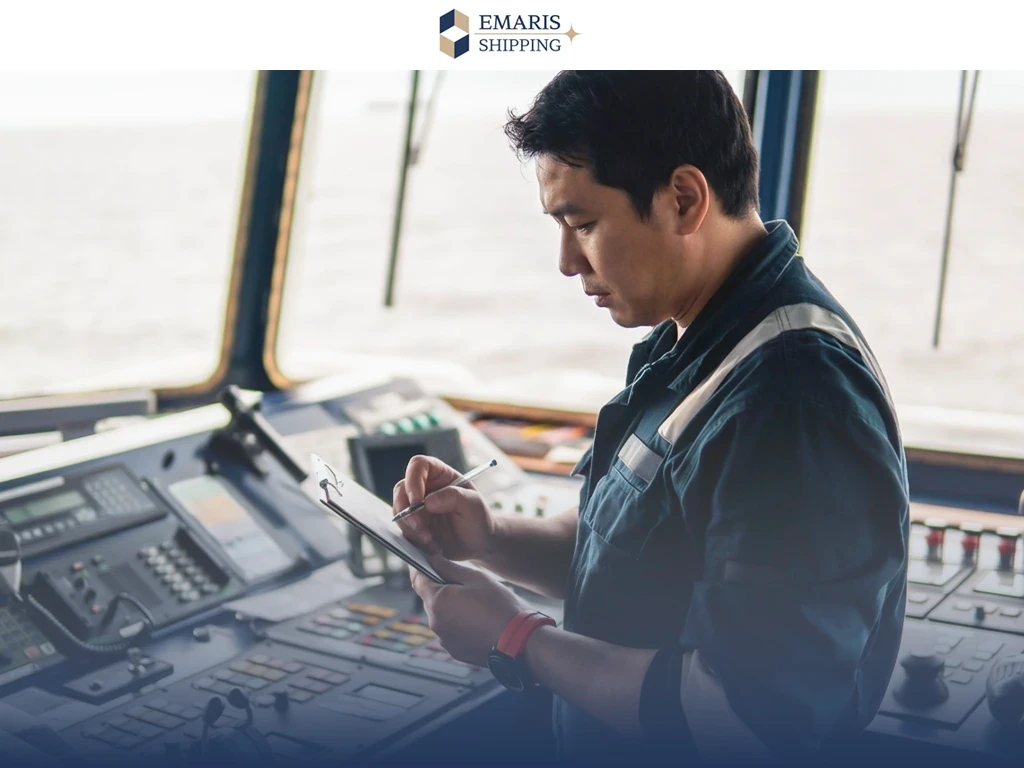
Picture this: it's 02:14 in the morning. A bunker tanker is navigating the Singapore Strait, one of the busiest shipping lanes in the world. Without warning, the engine room temperature alarm triggers. Within minutes, smoke is visible. The crew musters. The Master declares a fire emergency.
What happens next depends almost entirely on what happened long before that night.
The quality of the drills held three months ago. The condition of the firefighting equipment serviced last quarter. The speed at which the shore team picks up the phone. The clarity of the emergency procedures documented in the vessel's Safety Management System.
Emergency response in ship management runs as a system, built long before anything goes wrong. And for tanker and bunker vessel operators in Singapore and Southeast Asia, the difference between a controlled incident and a catastrophic one often comes down to how seriously their ship manager built that system before anything went wrong.
This article breaks down exactly how professional ship managers handle emergency situations, from the preparation that happens months in advance, to the real-time response chain when a crisis unfolds, to the investigation and recovery work that follows.
What Counts as a Maritime Emergency
Before examining how ship managers respond, it helps to understand the range of emergencies they must plan for. Maritime emergencies are not limited to dramatic sinkings or collisions. They span a wide and operationally complex spectrum.
Fire and explosion remains one of the most dangerous emergencies at sea. Engine room fires, cargo area ignitions, and accommodation fires each require different suppression approaches and evacuation procedures. On tankers carrying flammable cargo, the risk is compounded significantly.
Flooding and structural damage can result from collision, grounding, or hull failure. The speed of flooding and the vessel's stability response determine how much time the crew has to act.
Crew medical emergencies, including serious illness, injury, and man overboard situations, require immediate triage, communication with shore-based medical support, and in some cases emergency evacuation by helicopter or rescue vessel.
Cargo-related incidents on tankers include spills, contamination, dangerous goods exposure, and vapour release. These carry both crew safety and environmental consequences, and often trigger regulatory reporting obligations immediately.
Machinery failure, main engine breakdown, steering gear failure, loss of power, can disable a vessel in a high-traffic or restricted waterway, creating secondary collision or grounding risk.
Security incidents include piracy, armed robbery, stowaways, and unauthorised boarding. In Southeast Asian waters, these remain a genuine operational concern for vessels transiting certain routes.
Environmental emergencies, particularly oil spills, activate a separate layer of response involving coastal state authorities, port state requirements, and P&I Club engagement from the first moment of discharge.
For bunker tankers operating in Singapore's port waters, several of these risk categories converge simultaneously. High vessel density, restricted manoeuvring space, flammable cargo, and the 24-hour operational tempo of bunkering create an environment where the margin for error is thin and the consequences of a slow or poorly coordinated response are severe.
The Ship Manager's Role Before an Emergency Happens
This is where most of the real work takes place. Effective emergency response is overwhelmingly a product of preparation, not instinct. Professional ship managers invest the majority of their safety effort before any emergency occurs.
Building the Safety Management System
The Safety Management System is the operational foundation of emergency preparedness. It works as a living framework that defines how the vessel identifies hazards, escalates concerns, and responds to emergencies across every foreseeable scenario.
Under Chapter 8 of the ISM Code, every company is required to establish procedures to identify, describe, and respond to potential emergency shipboard situations. Ship managers are responsible for developing these procedures in a way that is specific to each vessel type, the trades it operates in, and the cargo it carries.
A well-built SMS emergency section will cover muster responsibilities for every rank onboard, escalation procedures from vessel to shore, communication protocols with external authorities, and decision trees for the most likely emergency scenarios. It must be written in language the crew can act on under pressure, not drafted to satisfy an auditor.
Ship managers review and update the SMS regularly. Regulatory changes, lessons learned from incidents across the fleet, and findings from internal and external audits all feed into SMS revisions. A static SMS is a liability.
Drill Planning and Execution
SOLAS requires regular emergency drills, fire drills, abandon ship drills, man overboard drills, and oil spill response exercises. Ship managers set the drill schedule, specify the scenarios, and verify execution through drill records and superintendent reviews.
The quality of drills matters far more than their frequency. A fire drill that runs through the motions, achieves muster in acceptable time, and is signed off without a debrief does almost nothing to prepare a crew for a real incident. A fire drill that uses a specific scenario, challenges the crew's decision-making, identifies equipment issues, and ends with a structured debrief followed by documented corrective actions genuinely builds emergency capability.
Ship managers who take this seriously record how the crew performed in each drill, beyond confirming that it took place. Patterns of poor muster times, missing crew members, or equipment faults identified during drills are indicators that corrective action is needed, not just logged and filed.
Crew Training and Competency
Emergency response is only as effective as the crew executing it. Ship managers are responsible for ensuring that every crew member holds the certifications required for their role, and that new crew joining a vessel are familiarised with its specific emergency arrangements before they stand a watch.
Under STCW, seafarers must hold valid certificates in basic safety training, firefighting, proficiency in survival craft, and, for tanker crew, advanced firefighting and tanker-specific safety training. Ship managers maintain crew certification records and flag expiring certificates before they create a compliance gap.
Beyond certificates, ship managers conduct or require onboard safety familiarisation for every new crew member. This covers the location and operation of emergency equipment specific to that vessel, muster station assignments, and the Master's emergency command structure. A crew member who joins a vessel two days before a fire emergency must be as prepared as one who has been aboard for six months.
Equipment Readiness
Emergency response equipment that fails when needed is worse than useless, it creates false confidence and delays effective action.
Ship managers incorporate lifesaving appliances and firefighting equipment into the vessel's planned maintenance system. Liferaft servicing, immersion suit inspections, EPIRB battery checks, fixed firefighting system maintenance, and portable extinguisher servicing are scheduled, tracked, and verified. Third-party service records are maintained as part of the vessel's certificate file.
Flag state certificates for lifesaving and firefighting equipment have renewal dates. Missing them is a PSC deficiency and a vetting finding. Ship managers track these dates across the fleet and ensure they are renewed without gaps.
When an Emergency Happens, The Response Chain
When an emergency is declared onboard, a coordinated response chain activates, simultaneously on the vessel and ashore. How well that chain functions determines outcomes.
The Master's Authority Onboard
The Master holds ultimate command authority during an emergency. Ship managers support that authority, they do not override it. The SMS defines the Master's powers clearly, including the authority to deviate from company instructions when the safety of the crew and vessel requires it.
The Master's immediate priorities are crew safety, damage control, and communication. In a fire situation this means activating the fire team, isolating the affected space, initiating suppression, and simultaneously communicating with the shore team and relevant authorities. These actions must happen in parallel, not in sequence.
The Shore-Based Emergency Response Team
The moment an emergency is reported, the ship management company's shore-based emergency response team activates. Responsibility sits with a structured team that has defined roles.The Designated Person Ashore is the central figure. Under the ISM Code, the DPA is the named individual responsible for the link between the company and the vessel. In an emergency, the DPA is activated immediately, maintains direct communication with the Master, coordinates the shore response, and serves as the escalation point for all decisions that require company-level authority. A ship manager's DPA must be reachable 24 hours a day, seven days a week. Not theoretically, operationally.
The Technical Superintendent assesses the technical nature of the emergency. In an engine room fire or machinery failure, the superintendent provides technical guidance to the vessel, helps evaluate options, and coordinates the engagement of external technical resources if needed.
The Crew Manager activates for any incident involving crew injury, illness, death, or welfare implications. Next of kin notifications, medical assistance coordination, and repatriation arrangements fall within this function. MLC obligations around crew welfare are active from the first report.
The HSQE Manager activates the formal emergency response procedures within the SMS, ensures documentation of the incident timeline from the first notification, and manages the regulatory reporting obligations that begin almost immediately for serious incidents.
Emergency Notification Protocols
The moment a serious incident occurs, notification obligations begin, and missing them creates additional regulatory exposure on top of the operational emergency.
Depending on the nature of the incident, the ship manager coordinates notifications to the Flag State administration, the coastal state if there is an environmental risk, the Port State if the vessel is in port or port approaches, the P&I Club, the hull and machinery insurer, and the classification society if structural damage is involved.
The P&I Club notification deserves particular attention. Club cover can be prejudiced by late notification. Ship managers ensure the P&I Club is contacted early, before the full picture is clear, because waiting for complete information before calling is one of the most common and costly mistakes made in incident response.
GMDSS, the Global Maritime Distress and Safety System, provides the vessel with the communication infrastructure to transmit distress alerts and maintain contact with maritime rescue coordination centres. Ship managers ensure GMDSS equipment is maintained and tested as part of the planned maintenance schedule.
External Resource Activation
Major emergencies require resources that no single ship manager can provide from their own organisation.
Maritime Rescue Coordination Centres, MRCC Singapore coordinates search and rescue within the Singapore Search and Rescue Region. Ship managers ensure Masters know how to communicate with the MRCC and what information will be required.
Salvage companies are engaged when structural damage, grounding, or loss of propulsion creates a risk of total loss or environmental damage. Ship managers maintain relationships with salvage providers and understand the Lloyd's Open Form (LOF) salvage agreement that governs most emergency salvage engagements.
Class surveyors attend incidents that may have compromised the vessel's structural integrity or class-maintained equipment. Their attendance is typically required before the vessel can return to service.
Port authorities must be notified for incidents occurring in port or port approaches. In Singapore, MPA has specific incident reporting requirements and will deploy response resources for environmental incidents.
Real-Time Decision Making
During a live emergency, ship managers face decisions with incomplete information and real consequences. The most important discipline is maintaining structured communication, documenting the timeline, recording decisions and their rationale, and ensuring that information flowing between vessel and shore is accurate and timestamped.
This documentation serves two purposes in the moment: it keeps the response coordinated, and it provides the foundation for the investigation that will follow. Ship managers who understand incident investigation know that a well-documented response is both operationally and legally valuable.
After the Emergency, Investigation and Recovery
When the immediate crisis is contained, the work is far from over. The post-incident phase is where ship managers either extract lasting value from a difficult situation or allow the same conditions to persist until the next incident.
Incident Investigation
The ISM Code requires a formal investigation for every serious incident, near miss, and hazardous occurrence. Ship managers lead or oversee this investigation, which goes well beyond establishing what happened to understand why it happened.
Root cause analysis in ship management examines both the proximate cause, the immediate trigger, and the systemic factors that allowed the conditions for the incident to exist. A fire that started because of an undetected fuel leak is not just a maintenance failure. It may be a symptom of an inadequate planned maintenance system, insufficient superintendent oversight, poor crew reporting culture, or a combination of all three.
The investigation report is a formal document that records the incident timeline, identifies root causes, and specifies corrective and preventive actions with responsible parties and completion dates. It is reviewed by senior management and, for serious incidents, submitted to the Flag State.
Reporting Obligations
Serious casualties carry reporting obligations to multiple authorities. Flag State administrations require casualty reports within defined timeframes. In Singapore, MPA has specific marine casualty reporting requirements. At the international level, serious casualties are reported to IMO's GISIS database.
Missing reporting deadlines creates secondary regulatory exposure. Ship managers track these obligations and ensure reports are submitted accurately and on time, even while the operational response is still active.
Corrective and Preventive Actions
The corrective and preventive actions that emerge from an investigation are only valuable if they are implemented, verified, and shared across the fleet.
Ship managers issue safety bulletins and fleet circulars that communicate the lessons from each serious incident to all vessels under management. This fleet-wide learning is one of the most powerful risk management tools available, and one of the most commonly underused. When the same incident type recurs across a fleet, it is almost always because the CAPA from the first occurrence was treated as paperwork rather than operational change.
Crew Welfare After a Serious Incident
Traumatic emergencies affect crew members psychologically, and ship managers have both a moral and contractual obligation to address this.
MLC provisions require companies to support crew welfare following serious incidents. Ship managers coordinate access to critical incident stress management resources, facilitate repatriation where crew are unable to continue their assignment, and manage the medical follow-up for any crew members injured or affected.
The crew members who experience a serious incident and receive appropriate support are far more likely to remain in the industry and continue serving on managed vessels. Those who do not often leave seafaring entirely.
Vessel Recovery and Return to Service
Getting a vessel back into commercial operation requires coordination between the ship manager, the classification society, the shipyard, the insurer, and the vessel's commercial operators.
The class surveyor determines what repairs are required before the vessel's certificates can be reinstated. The ship manager coordinates the repair specification, oversees the shipyard work, and manages the survey attendance. The P&I Club and hull insurer are engaged throughout the claims process.
A vessel that has been through a serious incident and returned to service with full documentation, completed repairs, and updated SMS procedures is in many ways better prepared than one that has never been tested. Ship managers who approach the recovery process with this mindset extract maximum value from a difficult experience.
What Separates Prepared Ship Managers from Reactive Ones
The patterns that distinguish professional emergency response from inadequate response are visible long before an emergency occurs.
Factor | Prepared Ship Manager | Underprepared Operator |
SMS documentation | Vessel-specific, regularly updated | Generic, last reviewed years ago |
Drill quality | Realistic scenarios, structured debrief | Checkbox exercise, no follow-up |
DPA availability | 24/7, operationally verified | Business hours, slow to activate |
P&I notification | Immediate, documented from first call | Delayed, waiting for full picture |
Post-incident learning | Fleet-wide CAPA, SMS revision | Closed internally, not shared |
Equipment maintenance | PMS-tracked, third-party serviced | Ad hoc, certificates lapsing |
The consequences of poor emergency response extend well beyond the incident itself. Insurance premiums increase following poorly managed claims. PSC detentions generate public records that follow a vessel. Oil major vetting rejection removes a vessel from the most lucrative charter markets. Reputational damage in the Singapore maritime cluster travels quickly.
Vetting inspectors conducting SIRE 2.0 and CDI inspections examine emergency preparedness in significant depth. Drill records, muster lists, equipment service records, and SMS emergency procedures are all reviewed. Inspectors who find gaps in these areas will generate observations and findings that directly affect a vessel's vetting status.
Related Reading:
Ship Safety Management Services: Reducing Tanker PSC Detentions
Emergency Preparedness as a Competitive Advantage
Shipowners who view emergency preparedness as a compliance cost are looking at it from the wrong direction.
A vessel with a tested and documented emergency response capability is a more attractive commercial asset. Charterers and oil majors assess emergency preparedness as part of their approval process. TMSA Level 2 and Level 3 requirements include specific elements around crisis management and emergency response that operators must demonstrate to access premium charter markets.
A strong safety record lowers P&I premiums over time. It reduces the frequency and severity of insurance claims. It maintains vetting approval with oil majors. It protects the vessel's asset value by avoiding the costly repairs, reputational damage, and commercial downtime that follow poorly managed incidents.
For bunker tankers and product tankers operating in Singapore and Southeast Asia, the commercial environment rewards operational credibility. Ship managers who build genuine emergency response capability, not just documentation, create a measurable competitive advantage for the owners they serve.
At Emaris Shipping, emergency preparedness is embedded in how we build and maintain Safety Management Systems for every vessel under our care. Our DPA function is available around the clock. Our superintendents are experienced in tanker and bunker vessel operations. And our post-incident investigation process is designed to produce fleet-wide learning, not just compliance reports.
Conclusion
Emergency response in ship management begins months and years before any alarm sounds. It lives in the quality of the Safety Management System, the realism of the drills, the readiness of the equipment, and the competency of the crew. When an emergency does occur, it plays out through a coordinated chain that spans the vessel, the shore team, the P&I Club, the Flag State, and the rescue authorities, all of whom must communicate clearly and act quickly.
The ship managers who handle emergencies well are the ones who treated preparation as their primary responsibility. The ones who struggle are the ones who believed preparation was something they could address after the fact.
For tanker and bunker vessel owners operating in Singapore and Southeast Asia, your vessels will face an emergency at some point. What matters is whether your ship management structure is ready when they do.If you want to understand how Emaris approaches emergency preparedness and incident response for bunker and tanker fleets, contact our team to arrange a consultation.