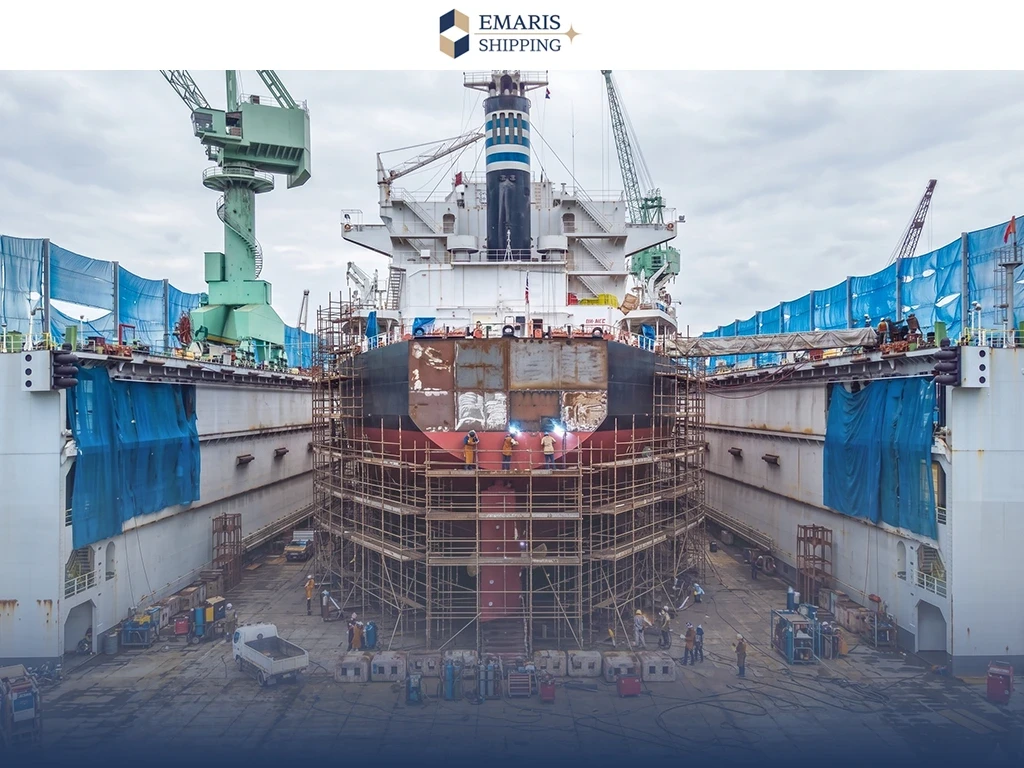
Dry docking is where technical ship management theory meets financial reality. Everything a technical manager does between dry docks- the maintenance discipline, the survey preparation, the condition monitoring, the specification work- determines whether the next dry dock is a controlled, budgeted event or an expensive, schedule-driven emergency. For most commercial vessels, the dry dock represents the single largest non-routine OPEX event in the vessel's five-year cycle. How it is managed defines the owner's actual experience of the technical management relationship.
A well-managed dry dock keeps costs within budget, returns the vessel to service on schedule, satisfies class survey requirements without conditions, and identifies future maintenance requirements that can be planned into the next cycle. A poorly managed one does none of these, and the cost difference between the two, measured in direct expenditure, off-hire days, and class conditions outstanding, can exceed the technical management fee for the entire period between dry docks.
Dry Dock Planning Timeline: Why 12–18 Months Is Not Early Enough
Effective dry dock planning for ships begins 12 to 18 months before the vessel enters the dock, and in some respects, it begins the moment the vessel exits the previous one.
The practical planning phases are:
18+ months out: Condition assessment and scope initiation
Technical superintendents begin tracking equipment condition trends, outstanding maintenance items, and known deficiencies that will need to be addressed in the upcoming dry dock. This is the phase where the distinction between a proactive and a reactive technical manager is most visible. Proactive managers start building the repair list from ongoing vessel data; reactive managers start writing the specification when the dry dock date is confirmed.
12 months out: Preliminary specification development
A preliminary dry dock specification, the detailed technical document that defines the scope of work for the shipyard, is developed based on condition assessments, class society survey requirements, flag state obligations, and the vessel's operational history. This specification becomes the basis for shipyard tendering.
8–10 months out: Yard selection and tendering
The technical manager issues the preliminary specification to approved shipyards, receives and evaluates tender submissions, and conducts yard selection based on cost, capability, availability, location, and track record with the vessel type. Yard selection for vessels operating in Asia typically involves yards in Singapore, China, South Korea, Indonesia, Malaysia, and the Philippines, each with different cost profiles, quality standards, and availability windows.
6 months out: Specification finalisation and pre-docking inspections
The specification is finalised, incorporating class survey scope, outstanding conditions, and any work identified through pre-dock underwater inspection or riding squad visits. Spare parts and materials required for the dry dock are procured and dispatched to the yard well in advance of the vessel's arrival.
3 months out: Logistics and crew planning
Crew change planning, superintendent deployment schedules, and owner representative arrangements are confirmed. The owner's representation plan for the dry dock is agreed, who is on site, with what authority level, and reporting through what process.
Specification Writing: The Most Important Document in Dry Docking
The dry dock specification is the technical document that defines the scope of work, and it is the most important document the technical manager produces in the dry docking process. A well-written specification achieves two things simultaneously: it gives the shipyard a precise, unambiguous definition of what needs to be done, and it gives the owner a clear basis against which actual work can be verified and invoiced.
A poorly written specification creates the conditions for scope creep (work added mid-dock without adequate competitive pricing), quality disputes (arguments about what "acceptable" means when the specification didn't define it), and cost overruns (lump-sum or approximate pricing in areas where the specification wasn't specific enough to allow competitive pricing).
The specification should define, for every item of work: the work required in technical terms, the acceptance standard (pass/fail criteria and measurable thresholds), the class society requirements applicable (where relevant), the parts or materials to be supplied (by owner or yard), and the inspection access and measurement requirements.
Superintendent experience is critical in specification writing. A superintendent who has overseen multiple dry docks on similar vessel types knows which items are typically under-specified, where yards add cost through vague scope language, and which class survey requirements need to be explicitly referenced rather than assumed.
Yard Selection: Cost Is One Factor, Not the Only Factor
Shipyard selection for dry docking involves balancing cost, capability, availability, location, and quality track record. In the Asia-Pacific region, where most vessels managed from Singapore will dry dock, the options range from high-quality, higher-cost yards in Singapore and South Korea to more cost-competitive yards in China, the Philippines, and Indonesia.
The cost differential between yards in the region can be significant, but cost comparison without capability and quality verification produces a misleading picture. A yard that prices 20% below the market average but routinely requires re-work, produces poor quality documentation for class survey items, or has limited experience with the vessel type will typically cost more in total than a more expensive yard that executes well.
Key criteria in yard selection include: demonstrated track record with the vessel type and size, current availability and slot commitment reliability, quality management certifications, class society approval status, and geographic access for owner representatives and parts deliveries.
For vessels managed from Singapore, the technical manager's relationship with regional yards, and their knowledge of which yards are currently performing well, is a practical advantage that owners without regional management presence cannot easily replicate.
Scope Management: Controlling What Gets Added Mid-Dock
Scope creep is the most consistent cost control challenge in dry dock management. Work items added after the original specification is agreed, because of unforeseen conditions found during the dock, because crew requests items not in the original scope, or because the yard identifies additional work they present as necessary, increase cost and, potentially, dock duration.
Not all scope additions are avoidable. Underwater inspections and in-service strip-down of equipment often reveal conditions that could not be identified during pre-dock preparation, and this additional work is legitimate. The management challenge is distinguishing genuine findings from opportunistic additions, and ensuring that every scope change is properly assessed, priced competitively, and approved by the owner before execution.
Effective scope management during dry docking requires: a clear approval threshold (what can the superintendent approve on site versus what requires owner sign-off), a documented change order process (every addition priced and recorded before execution), and daily progress reporting that tracks both physical progress and commercial status against the original budget.
The best technical managers deploy superintendents with both technical authority and commercial awareness, who can judge whether a piece of work needs to be done and whether the yard's proposed cost for doing it is reasonable.
Cost Control: How Technical Managers Protect the Budget
Dry dock cost control begins before the vessel enters the dock, through specification quality, yard selection rigour, and parts procurement, and continues through active on-site management until the vessel clears the dock.
Strategies that consistently support cost control in technical ship management include:
Owner-furnished materials, for high-cost items (certain grades of anti-fouling paint, major machinery components, specialty fittings), sourcing directly through the owner's supply chain rather than through the yard's material supply eliminates the yard's mark-up on materials, which can be substantial.
Competitive tendering for specialist services, for underwater inspection, non-destructive testing, propeller repair, and other specialist services, competitive tendering within the yard's prequalified supplier list typically produces better pricing than accepting the yard's default subcontractor.
Daily cost tracking, the superintendent should track actual costs against budget daily and report variances to the technical manager ashore. Surprises at invoice stage indicate that daily tracking was not happening during execution.
Contractual quality standards, the specification should include defined acceptance criteria for key work items (coating thickness, propeller finish grades, steel replacement quality), with the right to reject non-conforming work before signing off completion.
Class Surveys During Dry Docking
Dry docking almost always coincides with class survey events, at minimum, the bottom survey (the class inspection of the underwater hull, propeller, and related systems), and often the special/renewal survey for vessels at the five-year cycle point.
The technical manager's role in class survey coordination during dry docking includes: confirming with the class society which surveys are due and their scope, arranging surveyor attendance and access, preparing all required documentation in advance, presenting the vessel for inspection in a condition that supports efficient survey completion, and managing any conditions or recommendations arising from the survey.
Vessels that arrive at dry dock with well-maintained class records, completed pre-dock condition assessments, and technically prepared crews consistently complete class surveys more efficiently than those where the survey preparation begins when the surveyor arrives on-site.
Post-Dry Dock Sea Trials and Handback
Sea trials following dry docking are the technical verification that all work completed in the dock was executed correctly and that the vessel is ready to return to service. For a conventional cargo vessel or tanker, sea trials typically include main engine performance testing, steering gear verification, anchor equipment testing, and verification of cargo system integrity where applicable.
The technical manager's role in post-dock sea trials is to confirm that all trial requirements are met, to accompany the class surveyor through the trial programme where required, and to manage any outstanding items that arise during trials before the vessel departs.
Handback, the formal documentation that all contract work has been completed, inspected, and accepted, should be structured to protect the owner's rights for any warranty claims on work quality in the post-dock period. The management of shipyard warranty claims is an underappreciated but important function: repairs that fail within the warranty period should be returned to the yard at their cost, and technical managers who track and pursue these claims protect the owner's OPEX budget.
How Emaris Manages Dry Docking
Emaris Shipping's ship management services include full dry dock management, from planning and specification development through yard selection, on-site supervision, class survey coordination, and post-dock handback.
Emaris's marine audits and survey consultancy services complement the dry dock management function by providing the pre-dock condition assessment capability and the survey preparation depth that produces better outcomes when the vessel enters the dock.
For tanker and bunker operators in Singapore, managing dry docks effectively means knowing the regional yards, maintaining class society relationships, and deploying superintendents who combine technical depth with commercial awareness. These are the practical competencies that translate a dry dock from a cost centre into a managed investment in the vessel's next operating cycle.
Frequently Asked Questions
How long does a ship dry dock take?
Dry dock duration depends on vessel size, the scope of work, and whether the dock coincides with a Special Survey. A typical intermediate dry dock for a product tanker or bunker barge may take 10 to 21 days. A full Special Survey dry dock with significant repair work can extend to 30 days or more. Planning that defines the scope precisely in advance, and manages scope additions tightly, consistently produces shorter docking periods.
How much does ship dry docking cost?
Dry dock costs vary widely by vessel size, yard location, work scope, and market conditions. For a medium-sized product tanker or bunker barge, a typical intermediate dry dock in a Southeast Asian yard might range from USD 400,000 to over USD 1 million, depending on scope. The cost is dominated by hull coating materials and application, class survey items, and any significant repair work identified during the docking.
Who manages a ship during dry docking?
The technical ship manager provides the primary management function, typically through a designated superintendent deployed on-site at the yard for the duration of the docking. The owner may have a representative present for major decisions and commercial sign-offs. The class surveyor attends to conduct and certify the required surveys.
What happens if the dry dock goes over budget?
Budget overruns in dry docking are addressed through the change order process, any work added to the original specification after commencement should be approved via a documented change order with pricing agreed before execution. If overruns arise from yard performance issues (rework, delays caused by the yard), these should be contractually addressed against the yard. If they arise from legitimate additional scope, the owner's approval framework, defined before the dock starts, determines who has authority to approve at what threshold.
What is the difference between a Special Survey and an Intermediate Survey?
A Special Survey (conducted every five years) is the most comprehensive class inspection, covering hull structure, machinery, and all safety equipment. An Intermediate Survey (at 2.5 years) covers key systems and confirms the vessel remains in class condition. Both may coincide with dry docking, though some class societies permit in-water surveys for the underwater hull at the Intermediate Survey under specific conditions.
External Sources