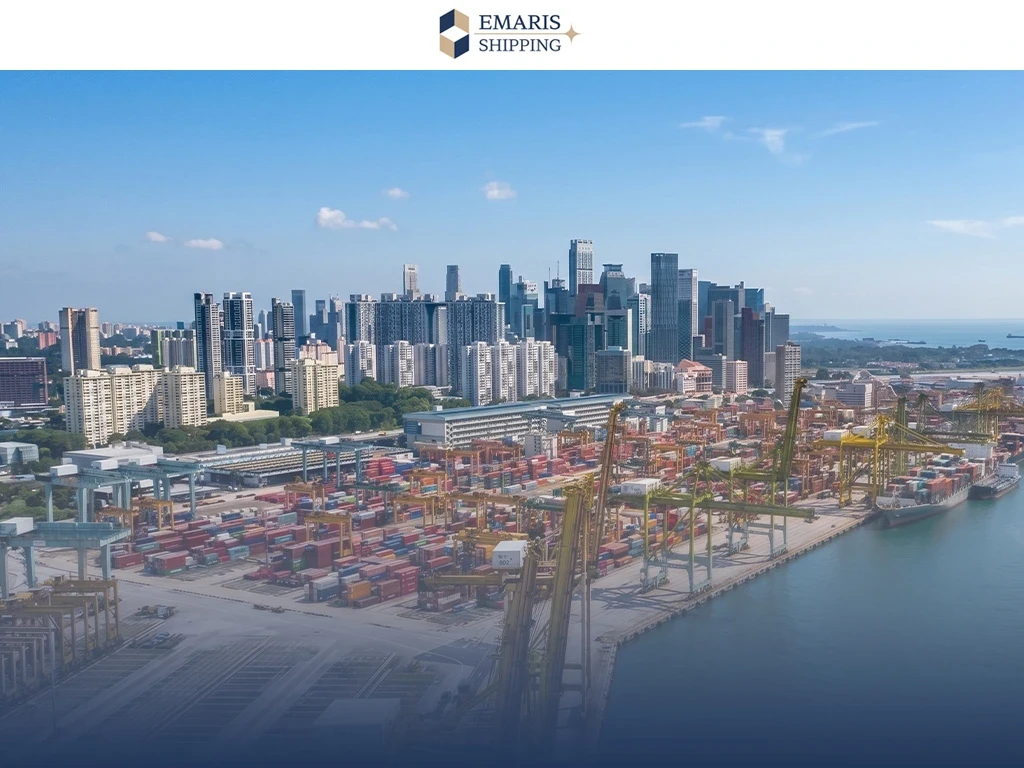
Singapore handles over 130,000 vessel arrivals annually at one of the world's busiest ports. More relevantly, it is home to more than 5,000 maritime companies, including some of the world's largest ship management firms. That concentration of expertise, regulation, and infrastructure is not accidental.
Singapore's rise as the dominant global ship management hub reflects deliberate policy, geographic logic, and decades of regulatory investment. For ship owners evaluating where to base their fleet management operations, or which management company to appoint, understanding why Singapore leads matters as much as understanding the mechanics of the services on offer.
This article examines the structural reasons behind Singapore's maritime dominance: its regulatory environment, its Flag State advantages, its crew access, its digital infrastructure, and how it compares against the competing hubs of Greece, Norway, and Hong Kong.
Singapore's Position in Global Maritime Operations
Singapore is the world's second busiest port by tonnage handled, processing more than 600 million tonnes of cargo annually. Its position at the western entrance of the Strait of Malacca, the chokepoint through which approximately 40% of global seaborne trade transits, gives it a geographic centrality that no competing hub can replicate.
Beyond throughput, Singapore's significance to the ship management industry lies in the density of its maritime ecosystem. BIMCO's Asia office is headquartered here. INTERTANKO maintains a significant Asia presence. ClassNK, DNV, Lloyd's Register, Bureau Veritas, and the American Bureau of Shipping (ABS) all operate major Singapore offices with full survey and technical capability.
This concentration means that a Singapore-based ship manager has direct access, without time zone friction or administrative lag, to the Class Society surveyors, Flag State representatives, P&I correspondents, and specialist marine contractors that fleet management requires on a daily basis. For owners managing vessels across the Asia-Pacific, Middle East, and Indian Ocean trade routes, that proximity translates directly into faster problem resolution and lower operating costs.
The Role of MPA in Regulating Ship Management
The Maritime and Port Authority of Singapore (MPA) is among the world's most respected maritime regulators. Unlike regulatory bodies in jurisdictions where flag of convenience registries operate with minimal oversight, MPA approaches ship management regulation with a quality-assurance orientation that aligns with the intent of the ISM Code under SOLAS Chapter IX.
MPA-authorised ship management companies operating under the Singapore flag must demonstrate ISM compliance as a condition of maintaining their Document of Compliance. MPA conducts regular audits and maintains a quality management framework that holds Singapore-based managers to a higher standard than the minimum required by many other administrations.
The result is visible in PSC data. Singapore-flagged vessels consistently maintain strong performance records across both the Tokyo MOU and Paris MOU inspection regimes. While no Flag State is immune to individual vessel deficiencies, the systemic compliance culture that MPA enforces, and that Singapore-based managers must embed into their SMS, produces fleets that inspectors scrutinise less and detain less.
For ship owners, appointing a manager subject to MPA oversight is not merely a geographic preference. It is an additional layer of quality assurance that sits above the contractual relationship, and one that costs the owner nothing extra.
Flag State Advantages for Singapore-Managed Vessels
The Singapore Registry of Ships (SRS) is a quality flag by any metric applied by the international maritime community. Singapore consistently appears on the Paris MOU white list, the classification reserved for flags whose vessels perform above the PSC inspection average across the MOU's member states.
White-list status has practical commercial consequences. Vessels flying the Singapore flag attract reduced inspection frequency in European and North American ports compared to grey or black list flags. Reduced inspection frequency means less off-hire exposure from unexpected PSC hold orders, and a lower risk profile that P&I clubs and H&M underwriters factor into premium calculations.
The presence of all major Class Societies in Singapore also simplifies survey management. Whether a vessel is classed with DNV, Lloyd's Register, Bureau Veritas, ClassNK, or ABS, the relevant surveyors are available locally for continuous survey items, condition assessments, and drydocking oversight. For owners, Flag State and Class Society coordination, which can be a source of administrative friction in less well-served jurisdictions, is handled efficiently without the need to fly surveyors internationally.
Access to Quality Crew in Singapore
Crew quality is central to ship management performance. A technically sound vessel with an under-qualified or poorly managed crew will fail SIRE, accumulate PSC deficiencies, and present a liability to the owner that no management fee structure can offset.
Singapore's geographic position makes it the natural hub for crew drawn from the three largest seafarer-supplying nations in Asia: the Philippines, which accounts for the highest share of global seafarer supply, with over 400,000 active seafarers, India, and Myanmar. Manning agencies serving these pools operate out of Singapore with established relationships with STCW training and certification centres in Manila, Mumbai, and Yangon.
Singapore's MLC 2006 compliance infrastructure is thorough. Port welfare facilities, crew change support, and the administrative framework for repatriation and seafarer dispute resolution are all embedded in Singapore's maritime regulatory environment. This matters for owners whose vessels transit Singapore regularly, as crew change operations that might require complex logistics in other jurisdictions are routine here.
A Singapore-based ship manager with established manning networks in the Philippines and India can maintain officer continuity across rotations, reduce the STCW certificate management risk that contributes to PSC deficiencies, and give the owner confidence that watchkeeping competency does not lapse between sign-off and sign-on.
Digital Infrastructure and Technology Adoption
Singapore's Smart Nation initiative, the government's long-term strategy for digital transformation across all sectors, has extended substantively into maritime operations. The digital infrastructure available to Singapore-based ship managers is materially more advanced than that available to their counterparts in Piraeus or Oslo, and the gap is widening.
MPA's Port Community System (PCS) enables electronic vessel reporting, digital crew certification management, and integrated port formalities that reduce administrative friction for arriving and departing vessels. Customs, immigration, and Port State documentation are processed through connected digital channels rather than paper-based workflows.
For ship management specifically, Singapore's digital environment supports the adoption of cloud-based PMS platforms, real-time vessel performance monitoring aligned with CII (Carbon Intensity Indicator) requirements under MARPOL Annex VI, and EU ETS compliance reporting tools that are increasingly critical as more vessels operate on European trades. A Singapore-based manager embedded in this ecosystem is better positioned to deliver the data-driven technical management that owners of modern fuel-efficient fleets increasingly require.
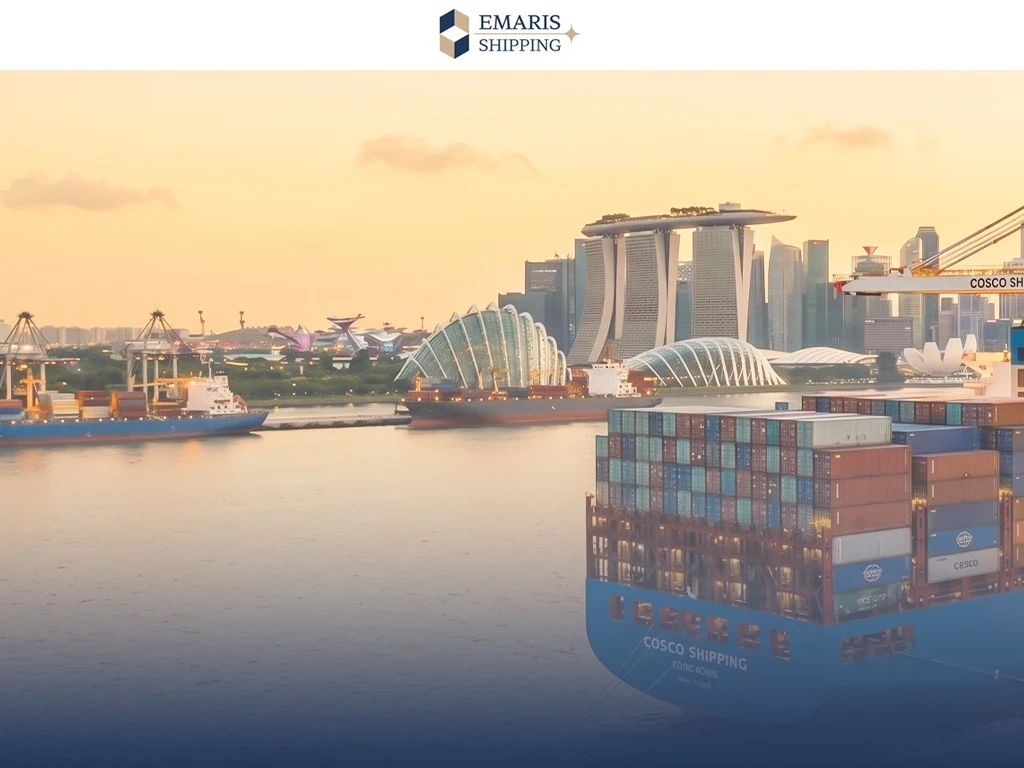
Singapore vs Other Ship Management Hubs
Greece (Piraeus) represents the largest concentration of fleet ownership in the world, and Greek-controlled shipping accounts for approximately 20% of global deadweight tonnage. Piraeus is a hub of fleet owners, not of third-party fleet managers. The regulatory framework for third-party ship management companies in Greece is less structured than Singapore's MPA-governed environment, and crew access from Southeast Asia adds logistical cost and lead time compared to Singapore.
Norway (Oslo and Bergen) has a long tradition of technical maritime expertise, particularly in offshore and specialist vessel segments. Norwegian ship management companies produce high-quality technical outcomes, but at a cost base that reflects Scandinavian labour markets. For owners managing conventional tankers, bulkers, or containerships on cost-sensitive trades, the Norwegian cost structure makes Singapore-based management more competitive without compromising quality.
Hong Kong was historically a significant ship management hub, particularly for bulk carriers operating in the Pacific. Post-2020, the regulatory environment in Hong Kong has shifted, and several international ship management firms have relocated or consolidated operations to Singapore. The Hong Kong flag's Paris MOU standing has also faced scrutiny in recent years, introducing PSC risk that owners managed under a Singapore flag do not carry.
On the four dimensions that matter most to ship owners, regulatory clarity, crew access, geographic location, and cost-competitiveness, Singapore consistently outperforms all three competing hubs. It is not a marginal advantage. It is structural.
Emaris: Singapore-Based Ship Management
Emaris Shipping is a Singapore-based, ISM-certified ship management company connected to the full maritime ecosystem that makes the city-state the world's leading fleet oversight hub.
Our technical management teams work directly with Class Society surveyors from DNV, Lloyd's Register, and Bureau Veritas, all of whom maintain Singapore offices. Our crew management operations draw on established manning networks in the Philippines and India, structured around STCW compliance and MLC 2006 rotation requirements. Our ISM audits are conducted under MPA oversight, giving owners confidence that our Safety Management System meets the standard expected of a Singapore-regulated entity.
We operate transparently. Monthly KPI reports covering LTIF, vessel availability, maintenance backlog, and bunker performance are standard for every managed vessel. Owner account disbursements are reconciled monthly with full supporting documentation. PSC deficiency trends are tracked, analysed, and addressed with corrective action plans that are shared with the owner, not filed internally.
For ship owners who want the commercial and operational advantages of Singapore-based management, explore our ship management Singapore services, or learn more about Emaris and how we work. We welcome direct conversations with fleet owners and managers evaluating their current arrangements.